
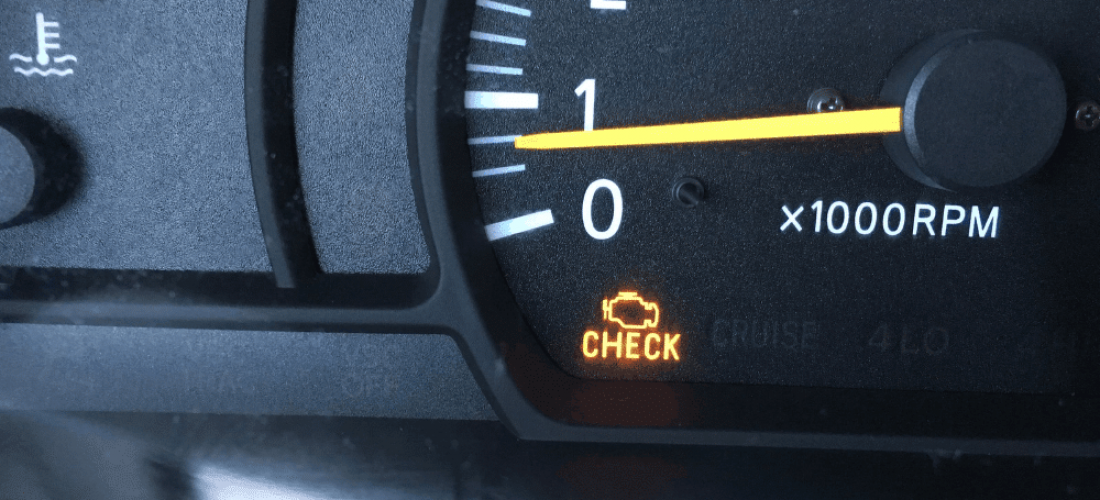
A check engine light on your Porsche means its onboard computer picked up a signal outside its normal operating range, and it’s not something to guess about. At EurAuto Shop in Plano, Texas, we see this warning light on 911s, Cayennes, Macans, and Panameras for a wide range of reasons, from a loose gas cap to a misfiring cylinder that needs immediate attention.
This guide walks you through what triggers the light, how to tell a serious problem from a minor one, and why Porsche’s engineering makes proper diagnostics so important.
What Your Porsche's Check Engine Light Is Really Telling You
Every Porsche runs an onboard diagnostic system that constantly monitors:
- Engine performance: fuel trim, ignition timing, and misfire counts
- Emissions output: oxygen sensor readings and catalytic converter efficiency
- Sensor circuits: dozens of inputs feeding the car’s control modules
When one of those readings falls outside its programmed range, the computer stores a fault code and turns on the check engine light on your dashboard. Think of it as your car flagging a problem it can’t fix on its own.
The light doesn’t tell you exactly what’s wrong, only that something needs a closer look. That’s why reading a code with a handheld scanner isn’t the same as an actual diagnosis. A code points to a general system, such as fuel trim or the ignition circuit, but pinpointing the exact failure takes a trained eye and the right equipment. For other symptoms to watch for, read our guide to signs your Porsche engine needs servicing.
Common Reasons a Porsche Check Engine Light Turns On in Plano, TX
Plano drivers bring their Porsches to us for a handful of common triggers behind a check engine light. Here’s what we see most often.
Ignition Misfires and Worn Spark Plugs
A misfire happens when a cylinder doesn’t fire the way it should, often from a failing ignition coil or a spark plug that’s worn past its service life. Left alone, a misfire can send unburned fuel into the exhaust system and damage the catalytic converter.
Oxygen Sensor and Emissions Faults
The oxygen sensor measures how much oxygen is in the exhaust, which tells the engine whether the fuel mixture is running rich or lean. A failing sensor throws off that mixture and can trigger the check engine light. Emissions-related faults are among the most frequent reasons a Porsche’s warning light comes on.
A Failing or Clogged Catalytic Converter
The catalytic converter itself can trigger a check engine light when it’s clogged or breaking down internally, not just when a misfire damages it. A failing converter often shows up as sluggish acceleration or a sulfur-like smell alongside the warning light.
Mass Airflow Sensor and Vacuum Leaks
The mass airflow sensor tells the engine how much air is coming in so it can calculate the right amount of fuel. A dirty sensor misreads the incoming air, and a cracked vacuum hose lets in extra air the sensor never measured. Either one can leave the engine running lean, with rough running or hesitation under acceleration.
A Loose or Damaged Gas Cap
It sounds minor, but a gas cap that isn’t sealing correctly lets fuel vapor escape and trips the evaporative emissions system. Check that the cap clicks fully into place. If the light stays on after a few days of driving, it’s time for a proper diagnostic.
Flashing vs. Solid Check Engine Light: What's the Difference
Not every check engine light means the same thing. The pattern it makes tells you how urgently you need to act.
What a Flashing Check Engine Light Means
- Signals an active misfire
- Sends unburned fuel into the exhaust system
- Can overheat and damage the catalytic converter within minutes of continued driving
Reduce speed and load, avoid hard acceleration, and pull over somewhere safe. Have it diagnosed right away, and arrange a tow if the car runs rough or loses power.
What a Solid Check Engine Light Means
- Points to a less urgent issue, such as an emissions sensor or a loose gas cap
- Still needs a diagnostic scan soon rather than being ignored
- Can turn into a bigger repair if it’s left unchecked
Why Porsche Vehicles Require Specialized Diagnostics
Porsche builds its vehicles around a proprietary electronic architecture, and that changes what an accurate diagnosis actually requires:
- Multiple control modules communicate through manufacturer-specific software.
- Generic code readers can pull a basic fault code, but they can’t access the depth of data a factory-level scan tool retrieves.
- Some repairs need calibrations that only factory-level software can perform.
- A Porsche Certified Technician reads that data correctly instead of guessing at parts.
That’s a major reason EurAuto Shop invests in factory scan tools and Porsche-specific diagnostic software instead of relying on universal equipment built for mass-market vehicles.
How EurAuto Shop Diagnoses Your Porsche's Check Engine Light in Plano, TX
When you bring your Porsche to EurAuto Shop, here’s what happens:
- We pull the stored fault codes with our factory-level scan tools.
- We walk you through what those codes mean before we recommend a single repair.
- We run targeted tests on the specific system the code points to, whether that’s the ignition, the emissions system, or a sensor circuit.
- We keep an open-door shop, so you’re always welcome to see what we found and ask questions along the way.
That process means the repair addresses the actual cause instead of just clearing the light.
Don’t wait on a check engine light to get worse. Stop by EurAuto Shop at 4008 West Plano Parkway, Plano, TX 75093, or call (214) 552-4194 to schedule your Porsche’s diagnostic appointment.
Is It Safe to Drive a Porsche With the Check Engine Light On?
It depends on the pattern and the symptoms:
- Solid light, no other symptoms: usually safe to drive to your appointment, though you shouldn’t put it off for long.
- Flashing light: an active misfire. Reduce speed and load, avoid hard acceleration, and pull over somewhere safe. Have it diagnosed right away, and arrange a tow if the car runs rough or loses power.
- Rough idle, loss of power, or a burning smell: treat these the same as a flashing light, since continuing to drive can lead to costly engine services or catalytic converter replacement.
When symptoms show up alongside the light, the safest move is to have your Porsche looked at before a small problem becomes an expensive one.
Why Choose EurAuto Shop for Your Porsche
Here’s what sets our shop apart when your Porsche’s check engine light comes on:
- Porsche Certified Technician: Our team includes a technician trained specifically on Porsche’s systems and software.
- Factory-Level Scan Tools: We use manufacturer-grade diagnostic equipment instead of generic code readers.
- Open-Door Transparency: You’re welcome to see your Porsche on the lift and ask questions about what we found.
- Lifetime Warranty: Non-wear parts and labor are covered for as long as you own your Porsche, with a 5-year/50,000-mile warranty on parts and labor for wearable items.
- Complimentary Rideshare: We’ll set you up with an Uber or Lyft ride while your Porsche is in our care.
- Family Treatment: Every customer gets the same respect and honesty, whether it’s an oil change or a full diagnostic workup.
Proudly Serving Plano, Frisco, Richardson, McKinney, Carrollton, Addison, and Collin County
Porsche owners from across Collin County choose EurAuto Shop for the same reason: specialized expertise you can actually see in action. Our shop on West Plano Parkway is an easy stop for drivers coming from:
- Plano
- Frisco
- Richardson
- McKinney
- Carrollton
- Addison
- All of Collin County
FAQs About Porsche Check Engine Light Repair in Plano, TX
Where can I diagnose a Porsche check engine light in Plano, TX?
EurAuto Shop at 4008 West Plano Parkway in Plano, TX diagnoses Porsche check engine lights with factory-level scan tools and a technician trained on Porsche systems. Manufacturer-specific software reads deeper fault data than a basic parts-store scan.
Why is my Porsche check engine light on?
A check engine light usually points to an ignition misfire, a failing oxygen sensor, a vacuum leak, or a loose gas cap. Only a proper diagnostic scan can confirm which system triggered the fault.
Is it safe to drive a Porsche with the check engine light on?
A solid light with no other symptoms is often safe for a short drive to a repair shop, but a flashing light or rough running means you should reduce speed, pull over somewhere safe, and arrange a tow if the car runs rough or loses power. Continuing to drive with an active misfire can damage the catalytic converter.
What is the difference between a flashing and solid check engine light?
A flashing check engine light signals an active misfire that can cause immediate engine damage, while a solid light points to a less urgent issue that still needs prompt attention. Both patterns call for a diagnostic scan rather than guesswork.
Why do Porsche vehicles require specialized diagnostics?
Porsche vehicles use proprietary electronic control modules and software that generic code readers can’t fully access. Specialized, factory-level diagnostic tools are needed to read complete fault data and perform accurate repairs.
Schedule Your Porsche Check Engine Light Repair in Plano, TX Today
A check engine light on your Porsche can mean anything from a loose gas cap to a misfire that needs immediate attention, and the only way to know for sure is a proper diagnostic scan from someone who understands Porsche’s systems. EurAuto Shop combines factory-level tools, a Porsche Certified Technician, and an honest, open-door process to get you an answer instead of a guess.
Visit us at 4008 West Plano Parkway, Plano, TX 75093, or call (214) 552-4194 to schedule your Porsche check engine light repair today.